Datum:
19. November 2024 9:00 - 18:00 Uhr
20. November 2024 9:00 - 16:00 Uhr
Sprache:
Standort:
Der Event findet auf Deutsch statt.
Dorint Kongresshotel, Mannheim, Deutschland
Hier geht es zur Anmeldung.
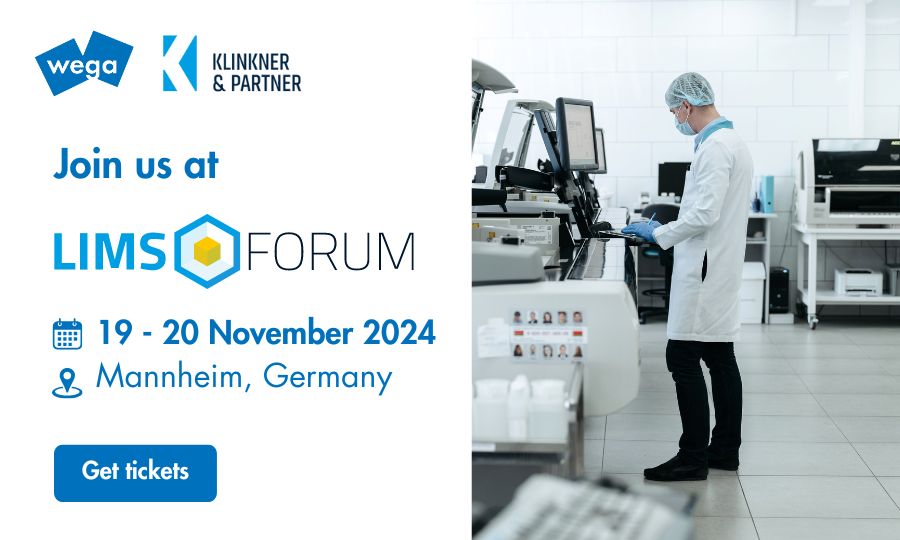
Zweitägiges Forum in Mannheim
Das LIMS-Forum, welches seit über 20 Jahren jährlich stattfindet, bietet LIMS-Anwendern und IT-Administratoren eine umfassende Gelegenheit, sich über die neuesten Entwicklungen und Technologien im Bereich der Labordigitalisierung zu informieren. Die zweitägige Veranstaltung ermöglicht es den Teilnehmern, aktuelle Systeme und Anwendungen kennenzulernen und sich mit Experten und Nutzern anderer Laboratorien auszutauschen. Das Forum richtet sich an Laboratorien, die bestehende Lösungen durch professionelle Standardlösungen ersetzen möchten, ältere LIMS-Systeme ablösen wollen oder die Digitalisierung kontinuierlich weiterentwickeln möchten.
Weitere Einzelheiten über die Veranstaltung finden Sie hier.
Vorschau auf das Programm
Tag 1
- Begrüssung (Dr. Roman Klinkner)
- Keynote - Digitalisierung in Untersuchungslaboren - Erkenntnisse aus einer Studie (Dr. Thomas Steinmann)
- 4 Vorträge zu LIMS Grundlagen
- LIMS-Ausstellung mit Action Area
- 4 Vorträge zu speziellen Fragestellungen
- Abendessen und Get Together (sponsored by Labordatenbank)
Tag 2
- LIMS-Ausstellung mit Action Area
- 2 Vorträge zu LIMS-Grundlagen
- 3 Vorträge zu speziellen Fragestellungen
Unsere Vorträge
Action Area Beitrag
Datum: An beiden Tagen auf der Action Area
Benutzerzentrierte Labor-Digitalisierung – Oder wie die Anwendung von smarter Digitalisierung einen echten Mehrwert für das Labor bringt
Stellen Sie sich vor, dass Ihnen Ihre Daten und Ergebnisse "automatisch" folgen, während Sie papierlos im Labor arbeiten. Mithilfe von PAC-ID (Publicly Addressable Content Identifier) und T-REX (Trivial Record Exchange), offenen und standardisierten intelligenten Bausteinen für das Labor, werden Daten nahtlos zwischen Instrumenten, ELN oder LIMS übertragen, ohne dass ein grösseres IT-Projekt oder eine umfangreiche Infrastruktur erforderlich ist.
Klingt zu schön, um wahr zu sein? Nehmen Sie an einer unserer Präsentationen teil, um die Magie hinter diesem Szenario zu entdecken. Zudem erleben Sie eine Live-Demo, die zeigt, wie diese Komponenten in einer realen Laborumgebung implementiert werden können.
LIMS – Ihr Weg zur digitalen Zukunft im Labor: Effizienzsteigerung, Datenintegrität und Compliance
Datum: Dienstag, 19. November 2024, von 9:50 - 10:35 Uhr
Aktuell stehen Labore vor vielfältigen Herausforderungen: steigende Anforderungen an Qualität und Compliance, zunehmende Datenmengen und komplexere Arbeitsabläufe. Ein modernes LIMS kann Sie dabei unterstützen, diese Herausforderungen zu meistern und Ihr Labor fit für die Zukunft zu machen.
Während es im Laborumfeld verschiedene Softwarelösungen gibt, die einzelne Aufgabenbereiche abdecken, bietet LIMS eine integrierte Plattform, die den gesamten Lebenszyklus von Proben und Daten abdeckt.
Nutzen für die Teilnehmer:
Die Teilnehmer erhalten einen umfassenden Überblick über die Vorteile und Funktionsweise von LIMS im Vergleich zu anderen Laborsoftwarelösungen. Sie erfahren, wie ein LIMS ihrem Labor helfen kann, die Effizienz zu steigern, die Qualität zu verbessern, die Compliance zu gewährleisten und die Zusammenarbeit zu verbessern.
Diskussionsrunde zu Organisational Change Management
Datum: Mittwoch, 20. November 2024, von 14:30 - 15:30 Uhr
1. Einführung und Bedeutung von OCM im Labor
- Was ist OCM (Organizational Change Management) und warum ist es im Laborumfeld wichtig?
- Welche Herausforderungen bringt der Wandel im Labor mit sich?
- Wie kann OCM dazu beitragen, diese Herausforderungen erfolgreich zu bewältigen?
2. Erfolgsfaktoren für OCM im Labor
- Welche wichtigen Erfolgsfaktoren sollten bei der Implementierung von OCM im Labor beachtet werden?
- Wie kann die Kommunikation und Einbeziehung der Mitarbeiter im Change-Prozess sichergestellt werden?
- Welche Rolle spielt die Führungsebene bei der erfolgreichen Umsetzung von OCM?
3. Praxisbeispiele und Best Practices
- Können Sie Beispiele aus Ihrer Praxis nennen, wie OCM im Labor erfolgreich umgesetzt wurde?
- Welche Best Practices haben sich im Laborumfeld bewährt?
- Welche Herausforderungen gab es bei der Umsetzung von OCM und wie wurden diese gelöst?
Für uns vor Ort:
Joachim Thewalt
Experte für die Analyse und Erfassung von Geschäftsanforderungen.
Er ist spezialisiert auf Prozesse im analytischen Labor im Life-Science-Umfeld und vertraut mit vielen Softwareprodukten auf dem Markt, die es ermöglichen, papierlose Laborlösungen sowohl von der Anwender- als auch von der technischen Seite zu implementieren.
Er kennt die Anforderungen, validierte Systeme nach der GAMP-Richtlinie zu spezifizieren und zu implementieren. Darüber hinaus ist er erfahren in der Leitung von Ausschreibungen (RfP) für Kunden oder der Beantwortung von RfPs im Namen von Lieferanten.
Sein Life Science Wissen ermöglicht es ihm, zwischen den Bedürfnissen der Anwender und den technischen Möglichkeiten von IT-Systemen zu vermitteln.
Joachim Post
Senior Consultant und Business Analyst bei der wega Informatik mit dem Arbeitsschwerpunkt Prozess-Optimierung, Labor-Digitalisierung und Auswahl von geeigneter Software für Laborprozesse (z.B. LIMS). Er ist zertifizierter Professional Scrum Master und Professional Product Owner (scrum.org) und verfügt über mehr als 25 Jahre Erfahrung im Projektmanagement verschiedenster Projekte in der IT (speziell Labor-IT), davon mehr als 16 Jahre Führungserfahrung als IT-Leiter und IT-Manager in einem internationalen Life-Science-Unternehmen mit über 20 Laborstandorten.
Bei wega koordiniert er weiterhin intern alle Aktivitäten rund um das Thema LIMS und kümmert sich als Mentor aktiv um die Weiterentwicklung von Kolleginnen und Kollegen im Unternehmen.
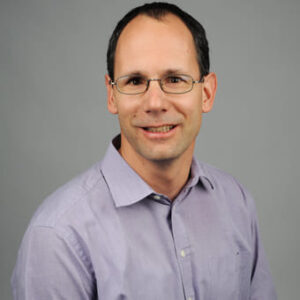
Daniel Juchli
Leiter der Abteilung Labor- und Forschungsinformatik bei der wega und Chief Technical Officer (CTO) beim SiLA-Konsortium.
Mit über 20 Jahren Berufserfahrung sowohl in der Chemie als auch in der Informatik spricht Daniel sowohl die Sprache der Wissenschaftler als auch der IT-Experten und kann zwischen den Bedürfnissen der Anwender und den technischen Möglichkeiten der IT-Systeme übersetzen.
Daniel ist Experte für die Digitalisierung von Laboren und leitet Projekte zur Auswahl, Einführung oder Entwicklung von Laborautomatisierungs- und IT-Lösungen im Life-Science-Umfeld.
Seit seinem Beitritt zu SiLA im Jahr 2014 als Vertreter des SiLA Supporting Member für wega Informatik hat er eine wichtige Rolle bei der Entwicklung des Laborverbindungsstandards SiLA 2 gespielt.
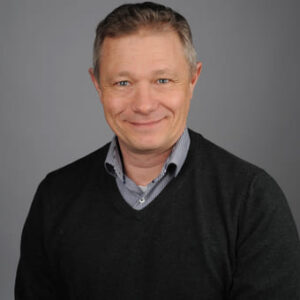
Mathias Fuchs
Scrum Master, Agiler Coach, IT Consultant und seit 2011 Co-Moderator der gemeinnützigen Schweizer ICT-Eventreihe: "Agile Breakfast Basel".
Mathias beschäftigt sich seit mehreren Jahren mit einer Vielzahl an agilen Themen. Insbesondere die Gründe für Erfolg und Misserfolg agiler Übergänge sind ein wichtiges Untersuchungs- und Interessengebiet von Mathias.
Er leitete erfolgreich mehrere agile Workshops und ist Referent auf Konferenzen zu agilen Themen.