Datum:
28.-29. September 2020
Standort:
Online - Hier können Sie sich registrieren.
Abstract:
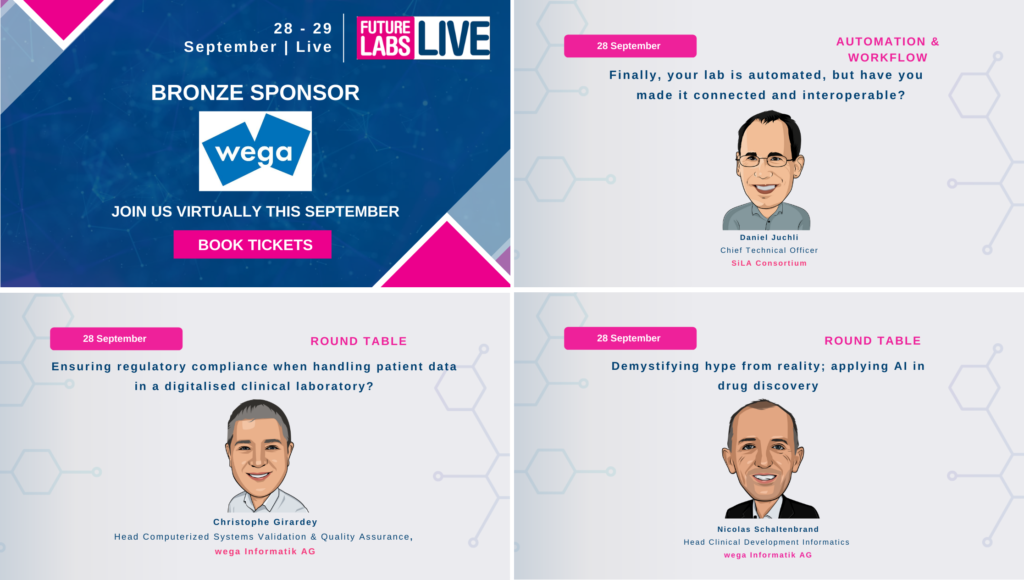
Das Lab of the Future wird ganz anders sein als das Labor von heute. Es besteht ein klarer Bedarf, zusammenzukommen, um sich zu treffen, zu debattieren, Ideen, bewährte Praktiken, Erfolgsgeschichten und Geschichten von Katastrophen auszutauschen.
Darüber hinaus gibt es mehrere Gründe, warum das Lab of the Future diskutiert werden muss:
- Organisationen und Geschäftsmodelle werden umgewandelt.
- Neue Arbeitsplätze werden erschaffen. Und alte werden ausgeweidet.
- Viele unserer bestehenden Prozesse und Geschäftsmodelle sind den Herausforderungen der Zukunft einfach nicht gewachsen
- Laborleiter von morgen werden verschiedene Fähigkeiten benötigen, um überleben und gedeihen zu können.
- Wir müssen dringend aus unseren Silos ausbrechen und uns treffen, reden und debattieren über Funktion, Industrie und Geographie hinweg.
Nehmen Sie mit uns am Future Labs Live Virtual Congress 2020 teil, um an der Spitze zu bleiben.
Die Veranstaltung wird die folgenden Themen abdecken:
- Künstliche Intelligenz & Maschinelles Lernen
- Das digitalisierte Labor
- Automatisierung und Workflow
- Konnektivität & Zusammenarbeit
- Analytik & Datengenerierung
- Strategisches Labor & Planung der Standortkapazität
- Branchenübergreifende Perspektiven
- Das Zukunftslabor
Weitere Einzelheiten über die Veranstaltung finden Sie hier.
Endlich ist Ihr Labor automatisiert, aber haben Sie es auch angeschlossen und interoperabel gemacht?
Jeder spricht von "digitaler Transformation", aber es wird selten daran gedacht, dass diese Art der Vernetzung stabile Daten- und Kommunikationsstandards erfordert. Viele Hersteller im Labor-(Automatisierungs-)Bereich setzen bei ihrer "digitalen Strategie" noch immer auf proprietäre Schnittstellen. Die "digitale Transformation" ist nur durch offene, erweiterbare und lizenzfreie Standards wie SiLA und AnIML möglich. Dieser Vortrag gibt einen Überblick über die Normungsorganisationen, den aktuellen Stand und berichtet über verschiedene Organisationen und Standards. Erfahren Sie mehr über die Anwendung der FAIR / SHARED-Prinzipien und ihre Vorteile:
- Langfristige Speicherung:
- Verbesserung der menschlichen Lesbarkeit von Daten
- Unabhängigkeit von spezifischer Gerätesoftware bewahren.
- Niedrige TCO
aktivieren
- Datenzugänglichkeit - Standards helfen, Daten zugänglich zu machen.
- Standards helfen Anbietern, heute Software für Techniken zu schreiben, die morgen erfunden werden.
- Scientific Data Management (SDMS) - endlich hat das (wartungsintensive und schwer zu validierende) Parsen von PDFs ein Ende.
- LIMS-Anbindung - Reduzierung der Anzahl der Einzelschnittstellen
- Standards vereinfachen auch:
- Bidirektionale LIMS-Schnittstellen: Entdeckung, Kontrolle, Ergebnisse, Rückverfolgbarkeit
- Die Datenanalyse
- Die Workflow-Orchestrierung
- Eine Integration mit CROs
Oder an unseren interaktiven Rundtischgesprächen am 28. September von 10 bis 11 Uhr morgens:
Gewährleistung der regulatorischen Compliance beim Umgang mit Patientendaten in einem digitalisierten klinischen Labor? (Christophe Girardey)
Hype von der Realität entmystifizieren; KI in der Medikamentenentwicklung anwenden (Nicolas Schaltenbrand)
Unsere Referenten:

Daniel Juchli
Head Lab & Research Informatics @wega und Chief Technical Officer (CTO) @SiLA-Konsortium.
Mit über 20 Jahren Berufserfahrung sowohl in der Chemie als auch in der IT spricht Daniel sowohl die Sprache der Wissenschaftler als auch der IT-Experten und kann zwischen den Bedürfnissen der Benutzer und den technischen Möglichkeiten von IT-Systemen übersetzen.
Daniel ist Experte in der Leitung von Projekten für die Entwicklung von Laborautomatisierung und IT-Lösungen in biowissenschaftlichen Umgebungen.
Er kam 2014 als Vertreter des SiLA-Unterstützungsmitglieds für wega Informatik zu SiLA und hat eine wichtige Rolle bei der Entwicklung von SiLA 2 gespielt.

Christophe Girardey
Head CSV & QA @wega.
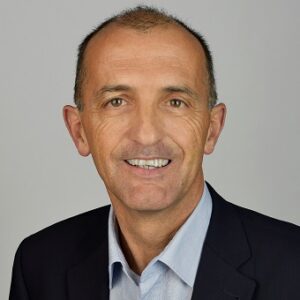
Nicolas Schaltenbrand
Head Clinical Development Informatics @wega.