
Datum:
28. - 31. März 2022
Standort:
Sprache:
Berlin-Mitte im Langenbeck-Virchow-Haus
Englisch
Abstrakt:
Mulit-Vendor Test Automation to support Process Automation
The laboratory of the future consists of an increasing number of connected devices and software applications that must interoperate with each other (e.g. LIMS, eLN, workflow schedular, lab instruments, mobile robots). While the software and interfaces are individually checked (tested) by the vendors, it is up to the user, or a third party integrator, to ensure the proper operation of the devices and software applications among each other. Updates to one or more systems can quickly disrupt automated processes. However, no updates mean an increasing security risk in the connected lab of the future. To ensure the robustness especially of automated processes, they must be re-tested after each update to check the interoperation of each entity involved, ideally all the way up to the user level, i.e., at the user interface level (GUI). This complex testing procedure is hardly feasible in the required cycles and time and must be automated to enable secure and robust automated processes.
Therefore, automated testing on GUI and application interface (API) level has a high potential to increase process security, robustness and flexibility and is therefore a key for a high throughput R&D and low idle times in production.
Here we present the possibilities of automated testing. As an example, we use a state-of-the art bioprocess automation with multiple instrument vendors, in combination with third party and homemade software applications and transfer it further in a regulated environment.
Weitere Einzelheiten über die Veranstaltung finden Sie hier.
Unsere Talks und Präsentationen:
30. März 2022 um 15:55 Uhr
Unsere Experten:
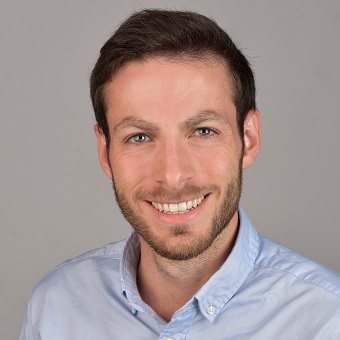
Jan Dahinden
Data Science Consultant bei wega Informatik AG, Schweiz.
Jan hat einen doppelten Abschluss in Computational Biology und Bioinformatik von der ETH Zürich, der Universität Zürich und der Universität Basel.
Auf seinem frühen Berufsweg konzentrierte er sich auf die Anwendung von Machine Learning Modellen zur Entdeckung von Antikörpern in silico und auf die Optimierung therapeutischer Antikörpern durch Deep Learning.
2020 kam Jan als Data Science Berater zu wega, wo er Unternehmen dabei unterstützt, Data Science Applikationen optimal zu nutzen. Seine Interessen strecken sich über den ganze Bereich von Data Science und umfassen die Automatisierung verschiedener Prozesse, Anwendungen von Machine Learning in der Life Science Industrie, Visualisierung von Daten und Prozessen und vieles mehr.
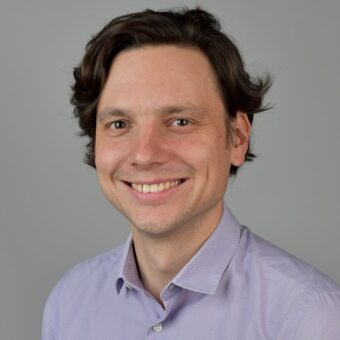
Sebastian Gross
Dr. Sebastian Groß ist Berater bei der wega Informatik (Deutschland) GmbH mit den Schwerpunkten Laborautomatisierung, Geräteintegration, Labor-Digitalisierung und Datenmanagement. Als studierter Biotechnologe hat er ein umfassendes Verständnis für biologische und technische Prozesse. Während seiner Promotion baute er eine Hochdurchsatz-Kultivierungsanlage zur Entwicklung von Bioprozessen auf, modellierte diese und kombinierte Automatisierung und Modellierung zu einer autonom arbeitenden Anlage. Seit seinem Start bei wega im November 2021 blieb er seiner Leidenschaft, Laborprozesse durch intelligente Digitalisierungsprozesse und Konnektivität zu verbessern, treu.
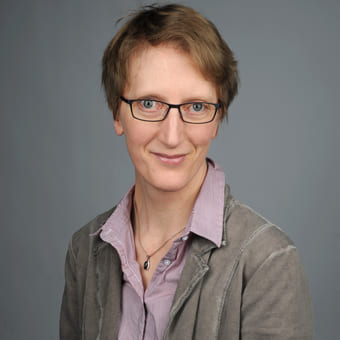
Sabrina Leuenberger
Dr. Sabrina Leuenberger arbeitet als Business Analystin und Test Engineer bei der wega Informatik AG, Schweiz.
Sabrina hält eine Doppelqualifikation in Biologie und Wirtschaftsinformatik der Universität Basel und der Fachhochschule Nordwestschweiz.
Ihre Interessen fokussieren sich auf die Definition von IT-Lösungen im Bereich Life Sciences für verschiedene Bedürfnisse und mit unterschiedlichsten Zielsetzungen, insbesondere im Rahmen der Digitalisierung.
Angefangen bei der Strategie und unter Anwendung von Business-Analyse-Methoden bis hin zur konkreten Beschreibung der endgültigen Lösung durch ausführbare Testfälle arbeitet sie daran, einen Mehrwert zu schaffen, der sich nahtlos in die bereits bestehende Systemlandschaft integriert.